
Story audio is generated using AI
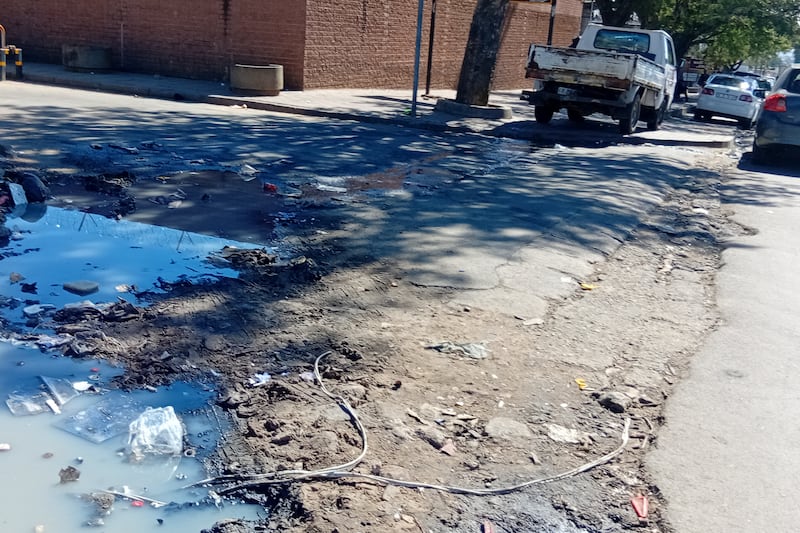
South Africa’s failing municipalities, marred by what seem like insurmountable financial and governance challenges, have been a drag on the national and local economies for well over a decade, stretching across several administrations.
Major economic hubs such as Johannesburg, which accounts for R16 of every R100 produced in the country, face gradual decline, dragging down broader national GDP growth.
Several failures have become common across many of the country’s 257 councils: weak financial management and revenue collection; failure to maintain infrastructure; ineffective supply chain management; irregular and wasteful spending; and weak consequence management.
A report released this week by the department of co-operative governance & traditional affairs — under the political leadership of Velenkosini Hlabisa — lays bare the entrenched lack of consequence management in local government, with North West emerging as the most errant province.
Hlabisa this week published the consolidated annual local government performance report for the 2024/25 financial year, which points to a weakening of enforcement even as the financial misconduct that should trigger it grew.
The data shows that the national balance of unauthorised, irregular, and fruitless and wasteful expenditure rose to R268.13bn, up from R264.10bn the year before. Recovery of these amounts was minimal, with municipalities relying on write-offs rather than recovering the money or disciplining those responsible.
North West carried the largest balance of any province, at R71.14bn, up from R66.97bn, and remained the largest contributor to the national total in both years. Gauteng, at R53.32bn, the Eastern Cape, at R49.63bn, and the Free State, at R43.41bn, were the only other provinces above R40bn.
The Western Cape carried the smallest balance nationally in both years, falling further from R3.52bn to R2.77bn.
“Enforcement declined,” the report states. “Criminal referrals to the South African Police Service fell from 37 municipalities to 20 where the accounting officer was implicated, and from 59 to 34 where the accounting officer was not implicated.
“This occurred even though more municipalities had adopted the required policies. The number of municipalities with signed systems of delegation also fell, from 130 to 127, weakening the assignment of responsibility for decisions and expenditure.
“Consequence management depends on a functioning disciplinary process once misconduct is identified.”
Nationally, 178 municipalities had a disciplinary board established in 2024/25, up from 147 the year before, though the number of financial misconduct allegations reported fell from 1,116 to 614 over the same period, while the number of officials formally charged with a financial offence rose 56% to 313.
The establishment of disciplinary boards ranged from 85% of municipalities in Mpumalanga and 82% in the Eastern Cape to 61% in the Northern Cape and 55% in North West. Even the better-performing provinces on this measure therefore left a meaningful share of municipalities without a board.
The consequences of this failure extend well beyond municipal accounts. Another serious problem is South Africa’s landfills, which require billions of rands to overhaul.
The Western Cape provincial government is preparing an application to access at least R3.1bn from the budget facility for infrastructure (BFI) to address waste-management infrastructure backlogs and the “many non-compliances” experienced by municipalities at waste disposal facilities.
To bolster its application, the provincial government is looking to rope in advisers to help it prepare an application to the National Treasury, acknowledging that it has resource constraints in submitting a BFI application and therefore intends to use the services of a provider to prepare and submit the application.
The tender document says the Western Cape “is facing increasing pressure on its waste management infrastructure due to population growth, urbanisation and rising waste generation. Many municipal landfills are approaching capacity, while others require significant improvements to meet compliance standards under the National Environmental Management Act.
“Recent departmental and external audits have revealed that many shortcomings occur at waste management facilities, with the areas of concern being the lack of sufficient infrastructure and the high rate of non-compliance of the environmental authorisation conditions, etc.”
It says an assessment study conducted last year found that the cost for the required infrastructure updates — for the five district municipalities and 24 local municipalities in the Western Cape — would amount to about R3.1bn.
In Gauteng, Infrastructure South Africa (ISA) — established to support project preparation activities aimed at developing investment-ready infrastructure projects — is also looking for transaction advisers to prepare bankable projects for six municipalities looking to repair their deteriorating waste management infrastructure.
According to their tender document, the province’s waste management system “is under significant strain, with several landfill facilities approaching their design capacities”.
A 2014 study found that about 394,969 tonnes of waste a year were disposed of at landfill sites within the Sedibeng region and about 378,436 tonnes a year within the West Rand region.
“These constraints have contributed to increased illegal dumping, environmental degradation, growing compliance obligations and escalating landfill management costs.”
The six participating municipalities are:
- Emfuleni Local Municipality;
- Lesedi Local Municipality;
- Midvaal Local Municipality;
- Merafong City Local Municipality;
- Mogale City Local Municipality; and
- Rand West City Local Municipality.
Business Times


Would you like to comment on this article?
Sign up (it's quick and free) or sign in now.
Please read our Comment Policy before commenting.