
Last Monday, a motley group gathered in the memorial chapel of Glasgow University in Scotland, UK, to close a chapter in the macabre tradition of colonialism where human remains of the colonised were collected as trophies and exhibited in museums in colonisers’ countries.
In the room were representatives of the Hunterian Museum, which is part of the university; leaders of the San, Nama, Griqua, Korana and Khoi San communities from the Northern and Western Cape; sports, arts & culture minister Gayton McKenzie; South Africa’s High Commissioner in the UK, Nyamane Mamabolo, and CEOs of the Iziko Museums of South Africa, and the South African Heritage Resource Agency.
The South African delegation was there to reclaim the partial remains, mainly skulls, of six South Africans which were plundered from graves and caves in the Cape by British colonialists and taken to the UK. Also on the list was a soapstone smoking pipe taken from a grave of one of the Griqua kings, and two plaster face casts, modelled on real people of the time.
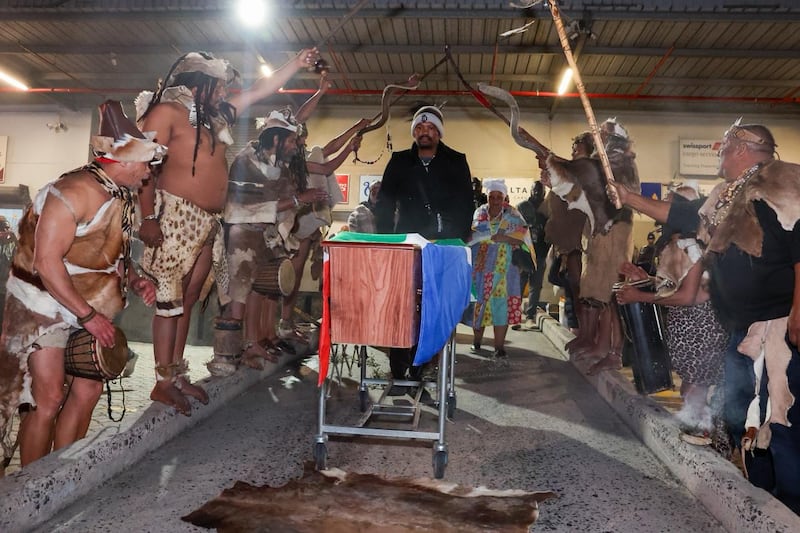
It was a moving ceremony which I watched on video, with the remains of our ancestors in boxes draped in our national flag. The leaders of the affected communities performed traditional rituals enacted when Africans move human remains from one place to another, extolling the spirits to follow them back home.
It was an important event that we all but missed as we busied ourselves with the shenanigans of the police generals and their minister, or the tenuous relationship between Hangwani Maumela and his Lamborghinis, and the president.
Two days before that event, a delegation from the Shuar community in Ecuador had been at Oxford University, also in the UK, to demand the return of skulls of their ancestors that, until five years ago, had been displayed in the museum of this renowned university. The skulls were only removed from the public eye when the Ecuadorians complained.
The skulls, also known in Ecuador as tsantsas, are considered sacred custodians of power.
There is still the case of the missing skull of King Hintsa of the AmaXhosa who had refused to bow to colonialism and was beheaded before his head was taken away. Who can forget the futile 1996 effort by Nicholas Gcaleka to try and find the head in Scotland?
A few months ago, the famous face mask of Benin was returned to Nigeria, while we took custody of grandma Sarah Baartman’s remains in 2002 after she was abused in life and in death by the British and the French. Baartman’s body was cut up and her private parts were stored in jars at a museum in Paris, where the mentally sick would go and ogle. It took the force of Nelson Mandela to extricate her from the clutches of the French.
What is it about Europeans and our dead bodies? Here are a group of nations that set sail from their shores, allegedly to civilise us, but end up as grave robbers. King Leopold II terrorised the people of the Congo, where he amputated the limbs of entire communities. Patrice Lumumba, the first prime minister of the Congo, was killed and his body thrown into a drum of acid, but one of the main perpetrators kept Lumumba’s golden tooth as a trophy. It was only recently handed back to his family.
There is still the case of the missing skull of King Hintsa of the AmaXhosa who had refused to bow to colonialism and was beheaded before his head was taken away. Who can forget the futile 1996 effort by Nicholas Gcaleka to try and find the head in Scotland.
The human remains of the six deceased and heritage objects from Glasgow arrived at the Iziko Museum in Cape Town on Thursday night, where they will be stored until December 16 when, together with 58 other sets of human remains from the Khoi and San communities which had been collected and exhibited at Iziko during apartheid, they will be buried in the Northern Cape.
On arrival on Thursday night, the remains were removed from boxes and placed in coffins as a first step to re-humanising the ancestors and restoring the dignity that was taken away from them more than a hundred years ago.
The constitution of our country enjoins us to recognise and correct the wrongs of the past and restore dignity to those whom coloniality abused.
In this time of great apprehension, when thieves prowl the corridors of power unashamedly and with impunity, the seemingly insignificant events in Glasgow ad Oxford tell us two things: the abuse of the colonised was universal, and also that Glasgow holds the glimmer of hope that in the midst of the doom and gloom, we still care. That we can and shall do right.
• Tsedu, a former editor of Sunday Times, is a member go the board of the South African Heritage Resource Agency






Would you like to comment on this article?
Sign up (it's quick and free) or sign in now.
Please read our Comment Policy before commenting.