
As a senior academic who has dedicated my professional life to research, teaching and academic leadership at South African universities, I am flabbergasted at the persistent xenophobic polemic over foreign academics in South Africa’s higher education institutions.
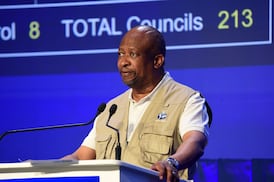
Let’s not mince words: the resurgence of this xenophobic populism is as cynical as it is dangerous. It is not born of a genuine commitment to transformation, but of political cowardice and opportunistic scapegoating. In this climate, we must be unflinching in our condemnation. The deputy minister of higher education, Buti Manamela, is right to take a clear and principled stand against this wave of anti-foreigner sentiment.
Those now sounding alarm bells about “foreigners taking academic jobs” are not speaking in good faith. They are exploiting the under-transformation in South African academia — not to fix it, but to inflame it. They rely on a poisonous logic: that the failure to develop and support black South African scholars can be pinned not on decades of state neglect and institutional inertia but on fellow African intellectuals working alongside their South African colleagues to improve academic excellence in our universities.
This logic is flawed, dishonest and divisive. And it is nothing short of betrayal of pan-African solidarity, of academic excellence and of truth.
We know the numbers: foreign academics are just over 11% of the academic workforce. But their presence looms large in the imaginations of populists because they are convenient targets. These scholars are not responsible for the shrinking postgraduate pipeline, the dysfunction of National Student Financial Aid Scheme (NSFAS), or the slow pace of transformation. They are not the reason so many black South African students hit a ceiling after their honours or master’s degrees. If anything, many foreign African academics have played a key role in mentorship, research collaboration and institutional leadership that lifts the entire system.
The best universities have much higher percentages of foreign academics than South African universities. At Oxford, about 48% of academic staff are from outside the UK. At Cambridge, about one-third of employees are from outside the UK. At the Massachusetts Institute of Technology in the US, 47% of academic staff are foreign-born and at the California Institute of Technology the figure is 45%. At Stanford, 22% of the staff are international, representing more than 80 countries. Princeton hosts a diverse academic community, with 42% of its graduate students being international, suggesting a significant international presence among its scholars. The same applies to Harvard.
To suggest that the mere presence of foreign academics in South Africa is an obstacle to transformation is to deliberately ignore the actual causes of the crisis: underinvestment, exclusionary institutional cultures and a lack of political will to fund, train and retain a new generation of black South African academics.
Let us be clear: xenophobia is not transformation. It is the enemy of transformation. The moment we begin to equate black foreign African scholars with obstruction, we have not only lost the plot; we have burnt the script. We are being asked to believe that academic progress for black South Africans can come only by cutting off collaboration, shrinking talent pools and retreating into nationalism.
Let’s fix the real problem. Let’s fund black South African academic talent
This is not just about numbers or policy — it is about the kind of country we are becoming. South Africa has a bitter history of violence fed by xenophobic rhetoric.
Politicians who fail to deliver on real transformation exploit xenophobic narratives to deflect accountability. Instead of interrogating why postgraduate education remains so underfunded, they point fingers at colleagues from other African countries. Instead of building the future, they dig trenches. We should not fall for it.
We need to fight, yes — but fight the right enemies: austerity budgets, elite capture of transformation agendas and the marginalisation of black women in academia. We need to demand more funding, more mentorship, more career pathways for black South African scholars, not fewer work permits for black African colleagues.
Manamela has spoken with courage and clarity. Now the rest of us must stand with him. Vice-chancellors, academic unions, student movements and progressive civil society must not be silent. The cost of cowardice is too high.
We do not protect South African academic futures by attacking African scholars. We protect them by building a university system that is inclusive, funded, accountable and globally connected. A system where black excellence, whether born in Mangaung or Morogoro, is celebrated.
Let’s fix the real problem. Let’s fund black South African academic talent.
• Mubangizi is a research professor at the University of the Free State
For opinion and analysis consideration, e-mail Opinions@timeslive.co.za




Would you like to comment on this article?
Sign up (it's quick and free) or sign in now.
Please read our Comment Policy before commenting.